
10-01-2026
Alberta – Canada: First Nations oppose referendum
Indigenous peoples criticise secession plans as a violation of treaties
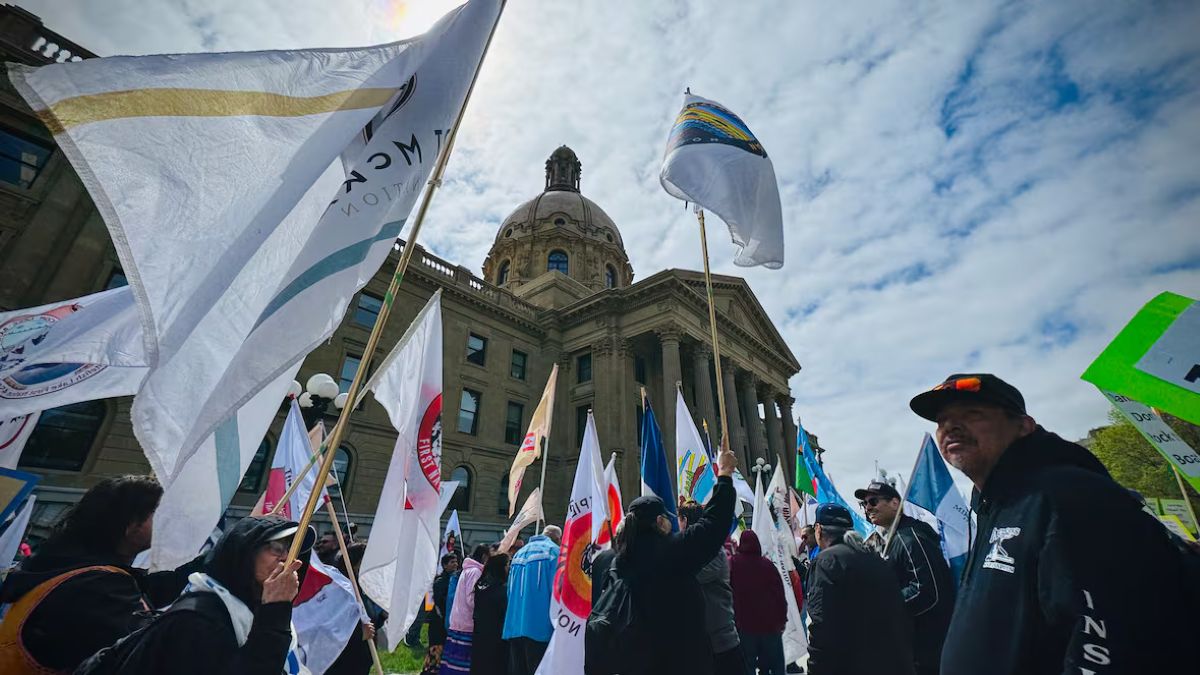
The Indian population of the Canadian province of Alberta, the First Nations, reject the referendum. The desired secession violates the Anglo-Indian treaties that are still in force. Photo: Charles Delisle - CBC
By Wolfgang Mayr
The First Nations of Alberta and Saskatchewan reject the Conservative Party’s plans to secede the two provinces from the Canadian state. They have announced their opposition to the plans.
‘We are often not heard,’ say Indigenous politicians in Alberta, criticising the ruling Conservatives in Alberta. Especially Premier Danielle Smith. Their concerns are constantly ignored, despite corresponding contractual obligations.
They remind the descendants of the conquerors and settlers that large parts of Alberta are still subject to ‘sacred treaties’ between the First Nations and the ‘imperial Crown.’ These include Treaties 6, 7 and 8, which stipulate that these territories ‘are held in trust by the Crown for the benefit of the Treaty First Nations, not as property of the provincial government.’
Furthermore, these treaties were signed long before Alberta joined the Confederation in 1905. Trust lands cannot secede or declare independence, as they belong to the First Nations, according to the indigenous interpretation.
In a letter, Sheldon Sunshine of the Sturgeon Lake Cree Nation and Billy Joe Tuccaro of the Mikisew Cree First Nation accuse the premier of seeking to divide the country with her referendum.
The two Cree Nations remind Smith that the province of Alberta is located on Indian treaty land. With her policy, the provincial leader is violating the treaties. After all, these are the founding documents of the country.
Alberta did not yet exist, write the representatives of the Cree, when their ancestors agreed to share the land with the British Crown. Their interpretation is that the province cannot suspend the treaties or abolish them by referendum.
The Federation of Sovereign Indigenous Nations, which represents 74 First Nations in Saskatchewan, expressed its ‘serious concern’ about Premier Smith’s recent actions to enable a possible referendum on Alberta’s future in Canada.
‘We are the first peoples of this country,’ FSIN Chair Bobby Cameron reminded the ruling Conservatives. ‘Those who want to leave are free to do so, but all lands, waters and resources belong to the First Nations.’
‘If you or Canadians are not happy living on treaty land, you are free to apply for citizenship elsewhere,’ Cree spokespeople recommend that Alberta Conservatives emigrate to the United States.
According to Cameron, the Conservatives’ separation plans violate constitutional and international law. The ruling United Conservative Party rejected the indigenous criticism and emphasised that it supports a sovereign Alberta within a united Canada.
The Alberta government, on the other hand, accuses the liberal Canadian government of preventing the construction of controversial pipelines such as Keystone XL. Infrastructure to export oil and oil products to the US. Smith criticises the Liberals for allegedly stifling the energy industry with spatial planning and environmental regulations.
She rejects this policy and will no longer tolerate it, announcing ‘resistance’ to the threat posed by the Liberal federal government to Alberta’s industries. She also criticises the federal government for laying its hands on Alberta’s resources.
Smith’s comments, who has already visited US President Trump, caused alarm, particularly among First Nations. Indigenous politicians called on Smith to resign.
In a letter, they called on Liberal Premier Carney to hold Alberta accountable for complying with the treaties. They will not tolerate further breaches of contract.
Indian Country Today quotes Brooks Arcand-Paul, NDP Member of the Legislative Assembly for Edmonton-West Henday. A member and legal advisor to the Alexander First Nation, he reminded the premier that the First Nations would have to agree to Alberta’s proposed separation from Canada. Alberta cannot terminate the treaties, especially not unilaterally, Brooks warned the premier. She is not authorised to do so, as the treaties were negotiated by the First Nations with the British Crown. Not with Alberta.
The First Nations in Alberta insist on compliance with the treaties and respect for their sovereignty. They do not want to become the 51st US state, nor do they want to be part of a new state of Alberta. The First Nations will defend their land; Alberta is Indian land, Brooks announces legal resistance.
SHARE